
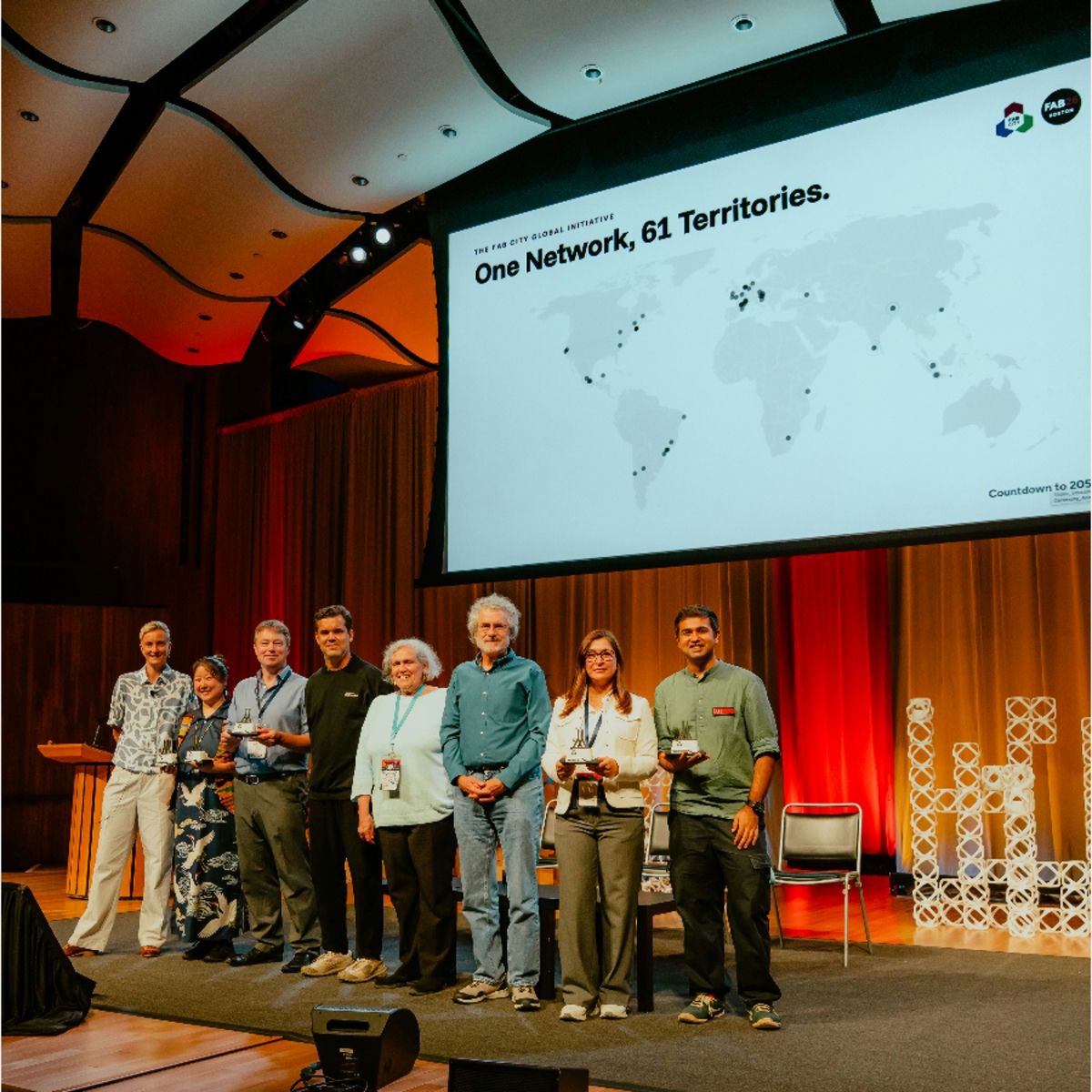
Integrated into FAB26, the 2026 Summit brought the Network back to where the Fab Lab movement started. Boston hosted the global Fab Lab event 25 years after the first Fab Lab, with more than 800 participants and over 250 activities across a full week in which almost nobody just attended. People ran workshops, hosted talks, and helped make the event itself. At MIT's Kresge Auditorium, five new cities and territories signed the Fab City Pledge: Accra, Cape Town, Goa, Kumasi, and Monterrey. Each brings a distinct answer to what a locally productive place can look like, from distributed manufacturing in Kumasi to public libraries reimagined as makerspaces in Cape Town, taking the network to more than 60 members across every continent. The Summit also launched Fab City Science together with MIT's Center for Bits and Atoms and MIT City Science, connecting the global Fab Lab network to the research shaping how cities produce, measure, and sustain themselves. At the MIT Media Lab, working sessions introduced the new Fab City Index and PLANETAI, the first instruments built to show whether the transition is actually changing a city's trajectory or not. Twelve years into the Pledge, observing, producing, and measuring became one operating logic. Boston reconnected the movement with its origins and set the agenda for the next twelve months: a shared science, real measurement, and a growing coalition of cities, regions, and territories producing locally while staying globally connected.
Redesigning the relationship between production and place
© 2026 FabCity. All rights reserved.