
2025-2028
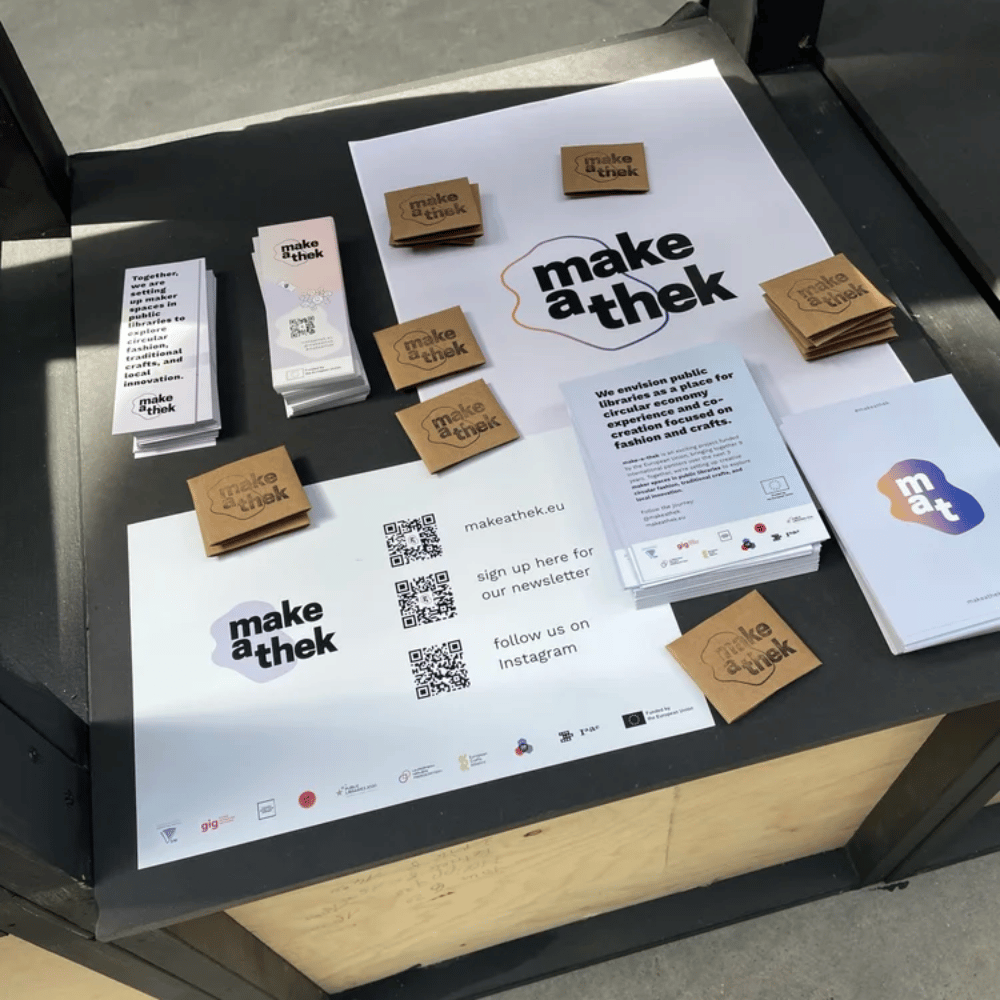
Make-a-thek explores how local libraries and community spaces can evolve into production and knowledge hubs. It integrates digital fabrication, open education, and community-driven experimentation within accessible public infrastructure. For Fab City, it reinforces the idea that distributed production must be socially embedded and publicly accessible.
Make-a-thek expands the physical footprint of Fab City beyond labs and hubs into civic spaces. It demonstrates that local production culture can be integrated into everyday public institutions. This lowers barriers to participation and strengthens the social dimension of distributed manufacturing. Within the Global Initiative, the project reinforces Fab City as a learning ecosystem. It shows how education, fabrication, and community infrastructure can converge to support long-term local resilience and knowledge sharing.
The project delivers pilot spaces, educational frameworks, community activation methodologies, and documented implementation models for integrating fabrication into libraries and civic institutions. These outputs support other Fab City localities seeking to embed production capacity within public infrastructure.
Redesigning the relationship between production and place
© 2026 FabCity. All rights reserved.