
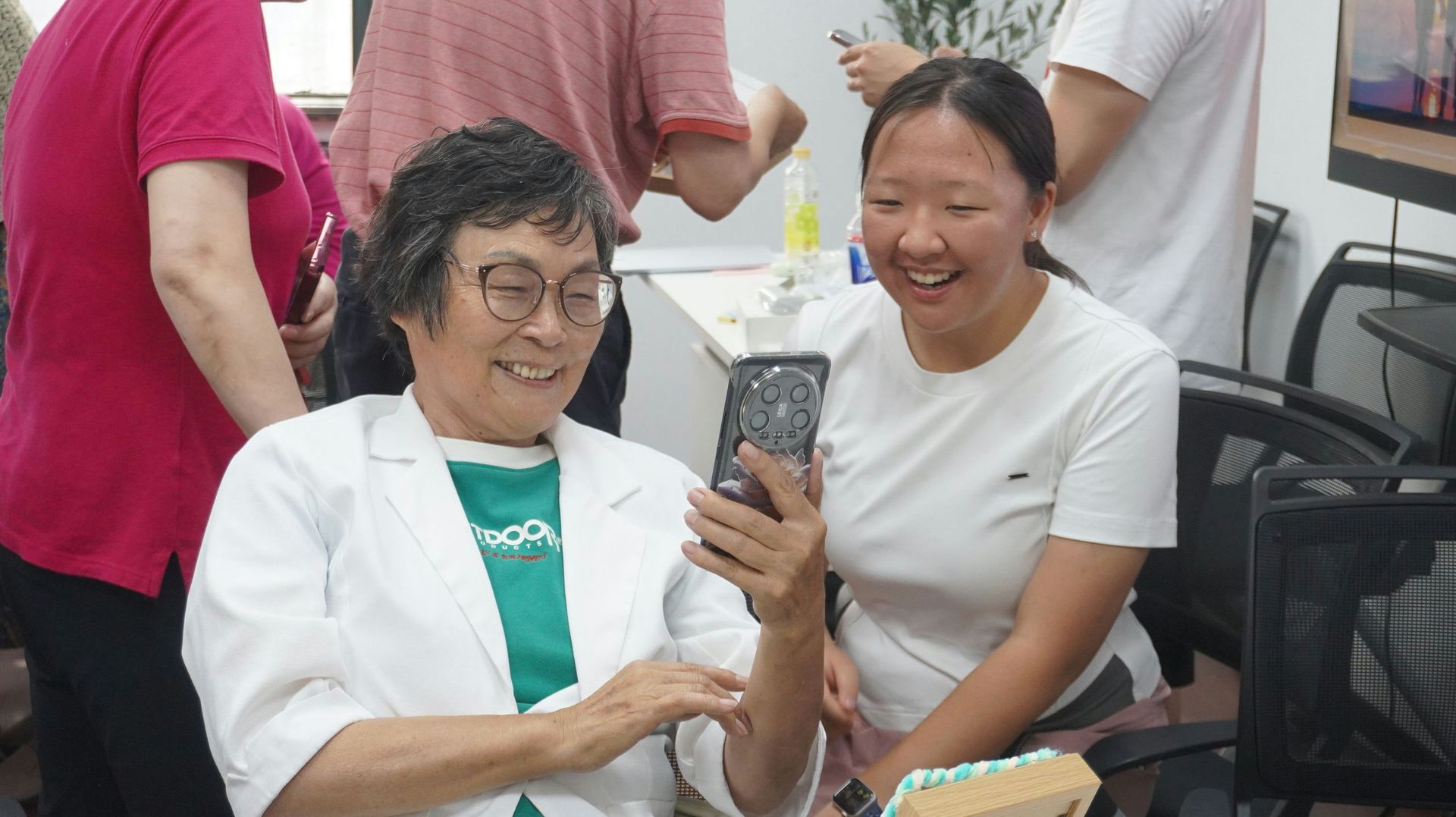
In a Shanghai community, our team addressed a challenge broader than teaching older adults to use smartphones: how might digital tools support safety, connection, dignity, and a continued sense of participation? We recognized the problem through field observation and conversations in a park, a neighborhood market, and Laoxiaohai’s community activity space. Older residents described difficulties with unfamiliar phone functions, unreliable online information, living alone, remembering daily tasks, and sharing thoughts with family members. At the same time, they did not want to be treated only as people needing help; they wanted to contribute experiences, tell stories, learn, and receive visible recognition. Two high-school students, supported by a science and technology educator and Laoxiaohai organizers, worked directly with approximately ten older community members. Market stallholders and older shoppers also contributed observations. The students began with a relatively technology-led idea for a content-based WeChat mini program. Through interviews, AI-assisted portrait and storytelling activities, smartphone photography practice, and discussions about old and new objects, they reframed the challenge around real daily routines and emotional needs. The resulting question became: how can a low-barrier digital companion help older adults record and complete meaningful daily activities, feel achievement, communicate with family, and receive home-safety support without intrusive cameras? The challenge combined community research, participatory activities, co-design, and rapid prototyping.
Redesigning the relationship between production and place
© 2026 FabCity. All rights reserved.