
Shenzhen, China
Shenzhen / July, 2024
200
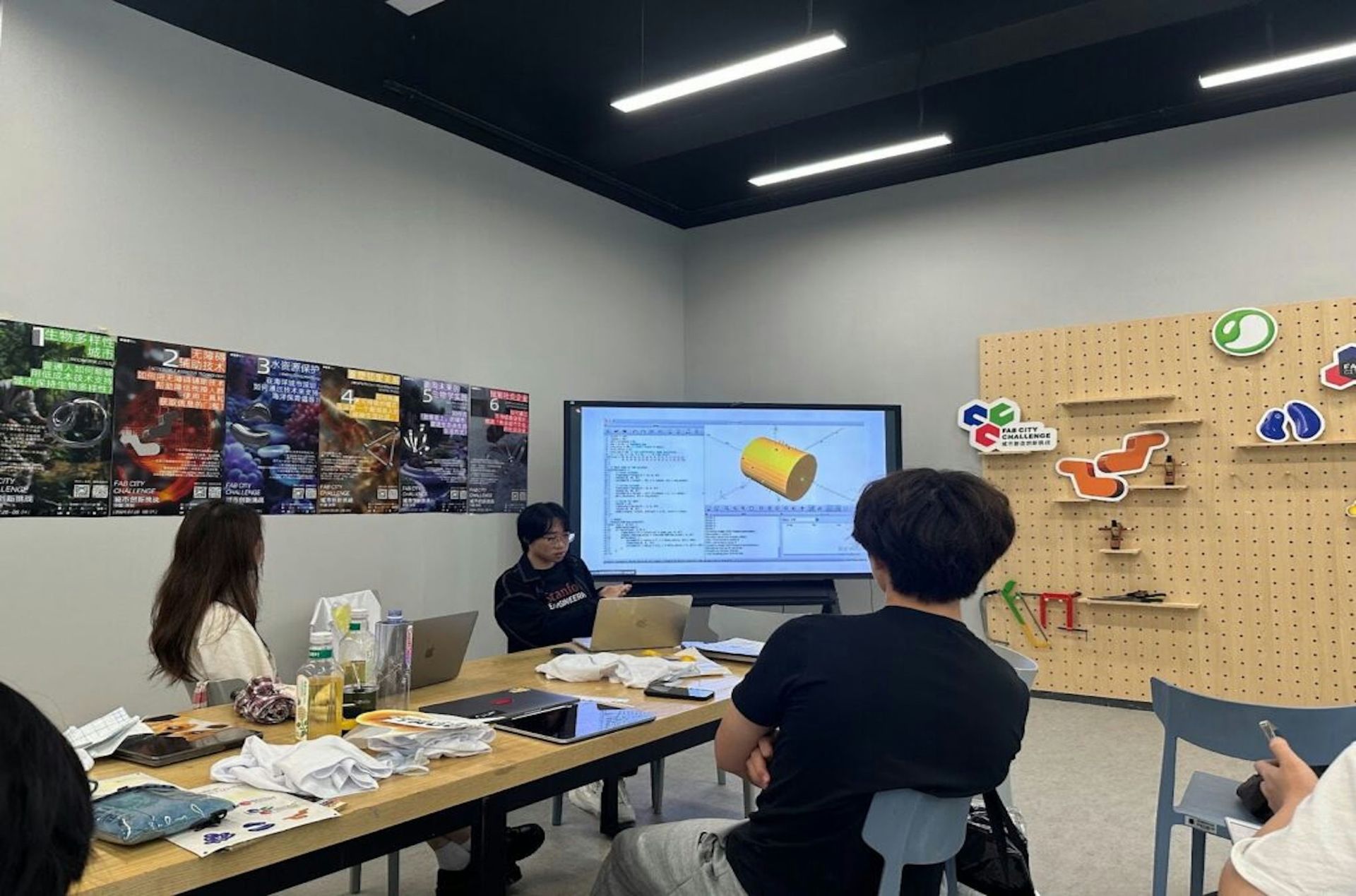
Hosted in Shenzhen, this edition introduced a deliberate shift in format. Instead of focusing solely on adult professionals and makers, the program engaged high school students, placing youth at the center of urban innovation. The Challenge concentrated on accessibility and inclusion, particularly for the visually impaired. Students conducted field research, interviewed stakeholders, and developed tangible solutions including tactile navigation systems, Braille guidance tools for commercial spaces, and awareness campaigns designed to shift public perception. Across participating communities, 34 proposals were developed. More than 200 students and over 30 teachers were directly engaged, spanning Shapu, Nantou, and Chengdu. The final exhibition reached more than 1,000 residents, educators, and city managers, extending the impact beyond the classroom. This edition marks the beginning of a new strategic direction for the Fab City Challenge. Rather than operating only as a flagship event attached to major gatherings, the program is now being embedded into different learning environments globally. By integrating the Challenge into schools and local curricula, Fab City is decentralizing the program and transforming it into a scalable educational methodology. The Shenzhen model shows how the Fab City Challenge can function as applied learning infrastructure. Students do not simulate change. They prototype it. In doing so, they experience firsthand what it means to produce locally, collaborate globally, and intervene in real urban systems.
Redesigning the relationship between production and place
© 2026 FabCity. All rights reserved.